Answer in brief
A useful spreadsheet does more than store test results. It connects pool settings, readings, maintenance work, purchases, and observations into one history.
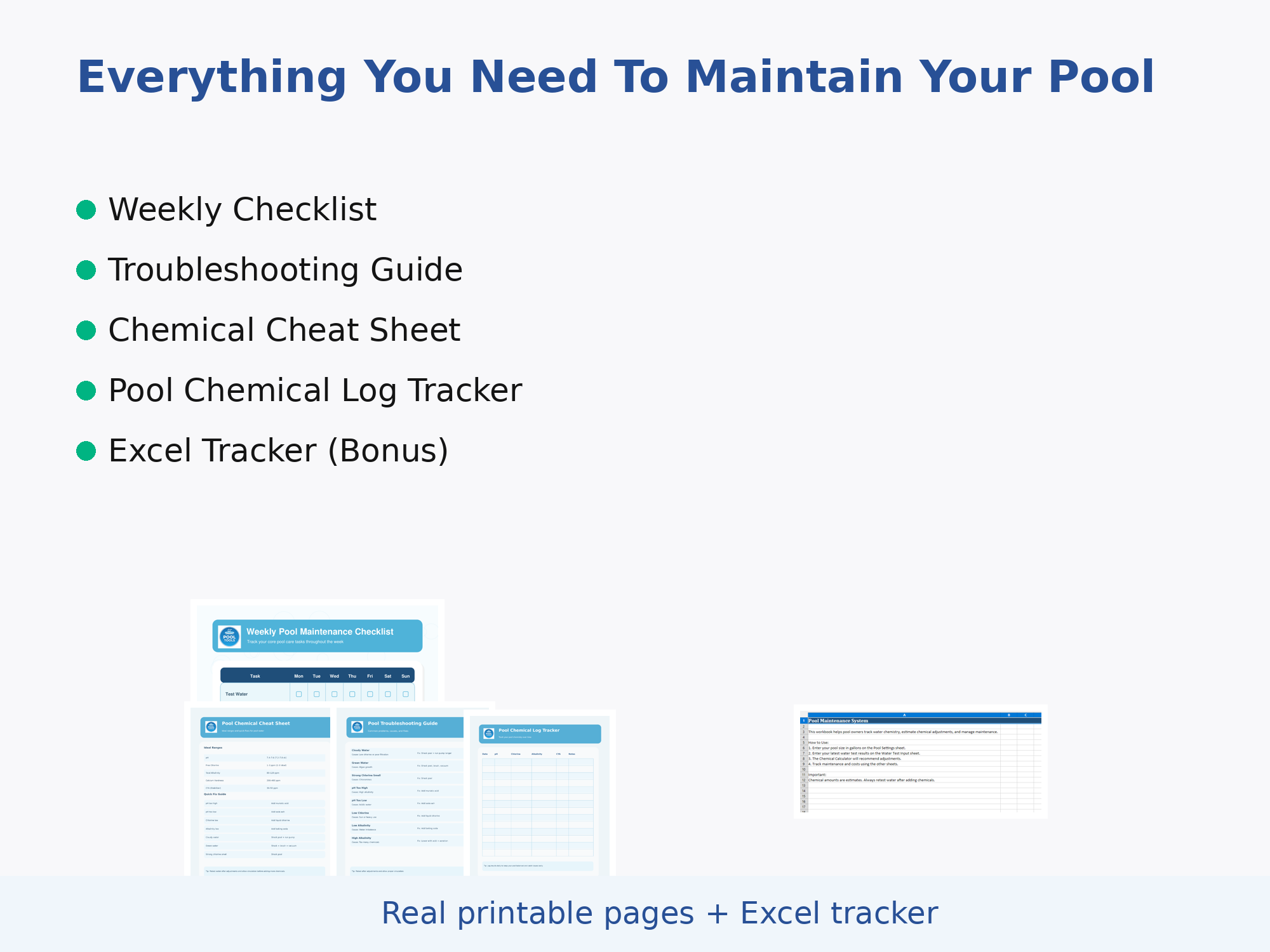
Begin with facts that do not change often
Record pool volume, pool type, surface, filter type, sanitizer, and your normal clean-filter pressure. These settings provide context for later entries. Recheck volume assumptions when buying a home or inheriting incomplete records, because an inaccurate volume estimate affects every dose calculation.
Use one consistent water-test entry
At minimum, record the date, free chlorine, pH, total alkalinity, stabilizer, calcium hardness when relevant, water temperature, and notes about unusual conditions. Your test method and pool professional may call for additional readings.
Preserve the action—not just the number
A row of readings cannot explain what happened next. Note the product added, maintenance performed, approximate amount, circulation time, weather, heavy swimmer use, and follow-up test. That turns a collection of numbers into a useful troubleshooting history.
Maintain a separate task log
Track brushing, basket cleaning, vacuuming, filter work, water-level checks, equipment observations, and scheduled service. Include a next-due date where it helps. Separating tasks from chemistry makes both records easier to review.
Connect purchases and costs
Record the date, item, category, store, and amount for chemicals, test supplies, cleaning tools, equipment, parts, and professional service. Over a season, the record can reveal which costs are routine and which follow recurring problems.
Review trends carefully
Look for repeated changes rather than reacting to one isolated entry. Confirm unexpected readings, follow chemical and equipment instructions, and consult a qualified pool professional when results are confusing or the equipment may be unsafe.